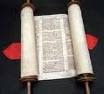
What does it mean to have these words to be upon our hearts? Throughout the Torah and the entire Old Testament the Lord kept asking and encouraging Israel to place His commandments upon their hearts. He said he desired obedience more than He did sacrifice. That which we are to place upon our hearts is God's Holy Law, His Torah, His loving instructions to us for our good. Yet we want to run after our own hearts and we refuse to listen to the voice of God. He is calling His people, both Israel by birth and Israel by adoption(Christians) to return to the very thing that God wants to place upon our hearts. God has always been a covenant making and a covenant keeping God and as such He requires us to be obedient through faith to His ways, His rules and His will. Jesus was obedient to all the commandments of the Torah and He taught His disciples to do the same. In these latter days He is once again crying out to His people, His church and saying "Will you return to me and turn from your wicked ways and from your own hearts desires? Will you set your hearts upon my ways, my Torah or will we continue to do it our own way?" Behold, He sets before us truth and life; now the choice is ours.
Portion Va’etchanan – ואתחנן : “And I besought”
Torah : Deuteronomy 3:23–7:11
Haftarah : Isaiah 40:1–26
Gospel : Acts 3-5
Thought for the Week:
In Him, you also, after listening to the message of truth, the gospel of your salvation—having also believed, you were sealed in Him with the Holy Spirit of promise, who is given as a pledge of our inheritance, with a view to the redemption of God's own possession, to the praise of His glory. (Ephesians 1:13-14)
Commentary:
In the recitation of the Shema (Hear O Israel), the Torah speak in the future tense when it says, “These words, which I am commanding you today, shall be on your heart” (Deuteronomy 6:6). This means that we are to endeavor to keep the commandments by placing them on our hearts, but it could also be read to imply an assurance of the future. Jeremiah 31:33 promises that in the new covenant, God will write his Torah upon our hearts. He says, “I will put My Torah within them and on their heart I will write it” (Jeremiah 31:33). This means that God will actually change our nature, circumcising our hearts as it were, to remove from us the waywardness of our evil inclinations. Paul speaks of this transformation as “the washing of regeneration and renewing by the Holy Spirit” (Titus 3:5). In another passage, Paul says, “Therefore if anyone is in Messiah, he is a new creature; the old things passed away; behold, new things have come” (2 Corinthians 5:17). Paul points to the lives of believers as evidence of the new covenant when he says, “You are a letter of Messiah, cared for by us, written not with ink but with the Spirit of the living God, not on tablets of stone but on tablets of human hearts” (2 Corinthians 3:3). All of this happens to believers as a fulfillment of the promise of the new covenant. The Holy Spirit is responsible for writing the commandments of God upon our hearts:
Moreover, I will give you a new heart and put a new spirit within you; and I will remove the heart of stone from your flesh and give you a heart of flesh. I will put My Spirit within you and cause you to walk in My statutes, and you will be careful to observe My ordinances. (Ezekiel 36:26–27)
But as of yet, we have not experienced this regeneration in its fullness. The completion of the promises of the new covenant awaits the coming of Messiah who is the “guarantee of a better covenant” (Hebrews 7:22). Paul tells us that God “gave us the Spirit in our hearts as a pledge” (2 Corinthians 1:22). A pledge implies a down payment on a sum which will be paid in full in the future. The down payment is the Holy Spirit within us now. The amount to be paid in full in the future is the Torah written on our hearts.
Now He who prepared us for this very purpose is God, who gave to us the Spirit as a pledge … a pledge of our inheritance, with a view to the redemption of God's own possession, to the praise of His glory. (2 Corinthians 5:5; Ephesians 1:13-14)
In that day of redemption, the words of Deuteronomy 6:6 will be made true. “These words, which I am commanding you today, shall be on your heart” (Deuteronomy 6:6).

No comments:
Post a Comment